





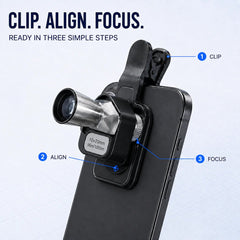
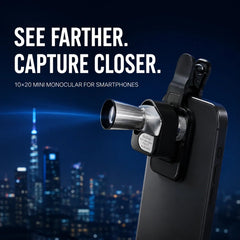


10 20 Mini Monocular Phone Telescope Pocket Long-Distance Viewer with Adjustable Smartphone Clip
- $24.99 USD
$39.99 USD- $24.99 USD
- Unit price
- per
-
Enjoy free shipping on orders over $50. Orders are processed within 1–3 business days and typically arrive within 7–15 business days.
-
We work with trusted international shipping partners to deliver orders worldwide.
-
Tracking information will be sent by email once your order ships, and you'll receive updates at key stages of transit until your package arrives.
Shop with confidence! We offer a 30-day return and exchange policy from the date you receive your order.
If you're not completely satisfied with your purchase, please contact our customer support team for assistance.
For return or exchange requests, please email us at support@householdchoose.com.
POCKET-SIZE OPTICAL VIEW
See It Closer. Capture It With Your Phone.
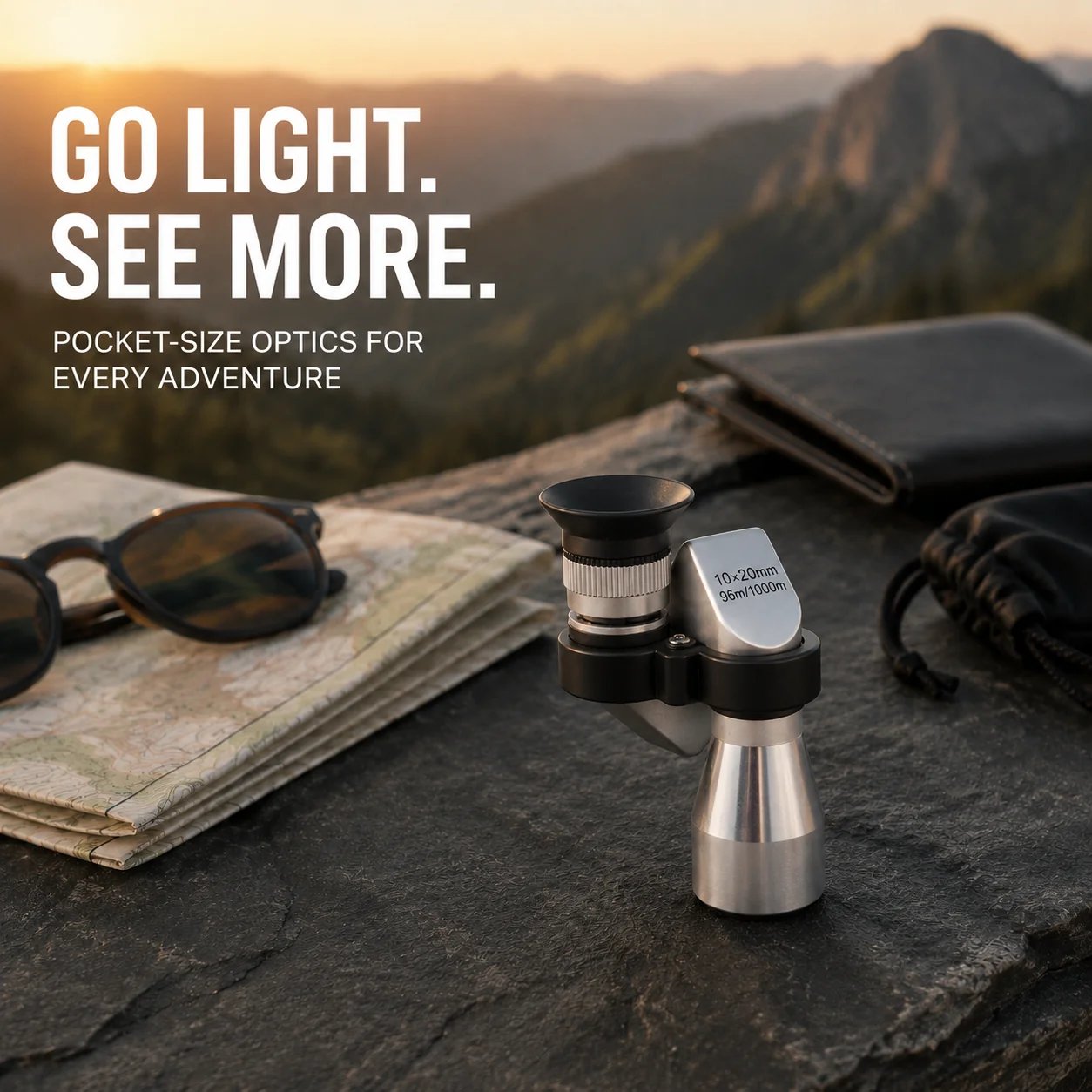
Bring distant landmarks, events and outdoor details into view with a compact 10×20 monocular that also connects to your smartphone camera.
10×Fixed optical magnification
20mmCompact objective lens
2 Ways to UseObserve directly or record by phone
WHEN YOUR PHONE CANNOT REACH
Far-Away Moments Become Tiny, Soft and Easy to Miss
Standard phone cameras are convenient, but distant stages, buildings and natural details can still look small in the frame.
- Bring distant subjects visibly closer
- Observe before deciding what to photograph
- Carry less than a full-size pair of binoculars
ONE SMALL TOOL. TWO MODES.
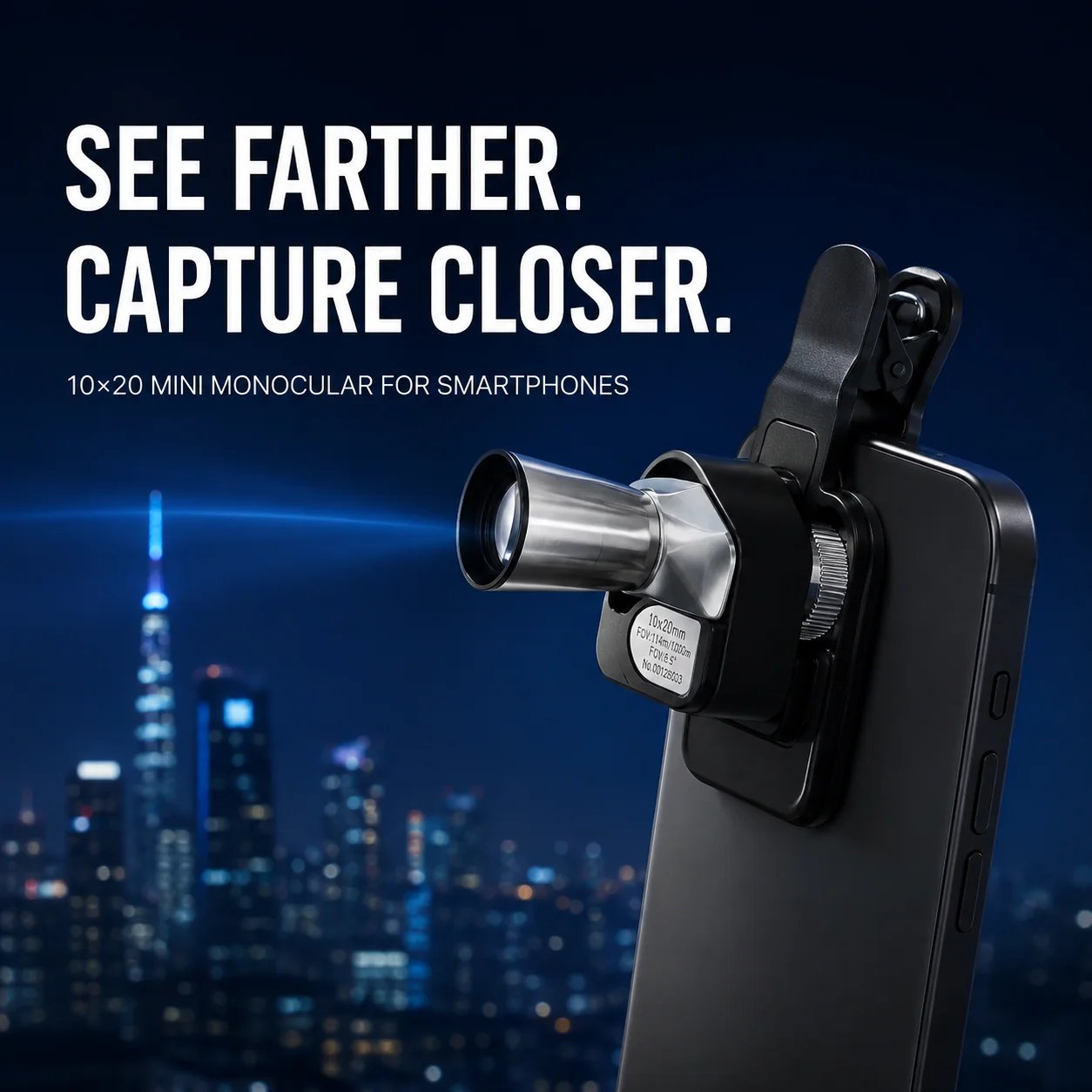
Look Through It—or Let Your Phone See Through It
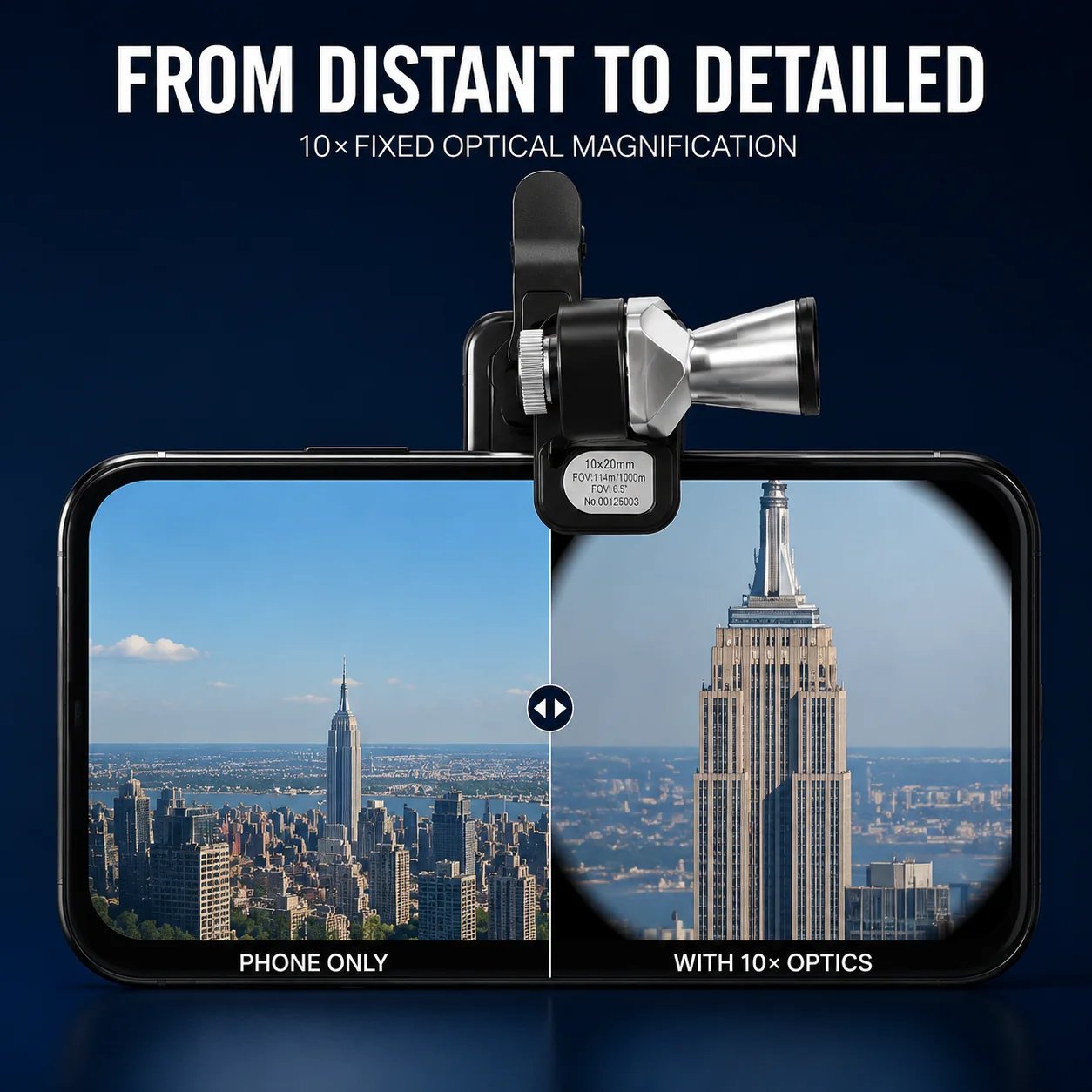
Use the eyepiece for direct monocular viewing, or align it with your phone's main camera to capture photos and videos of the magnified view.
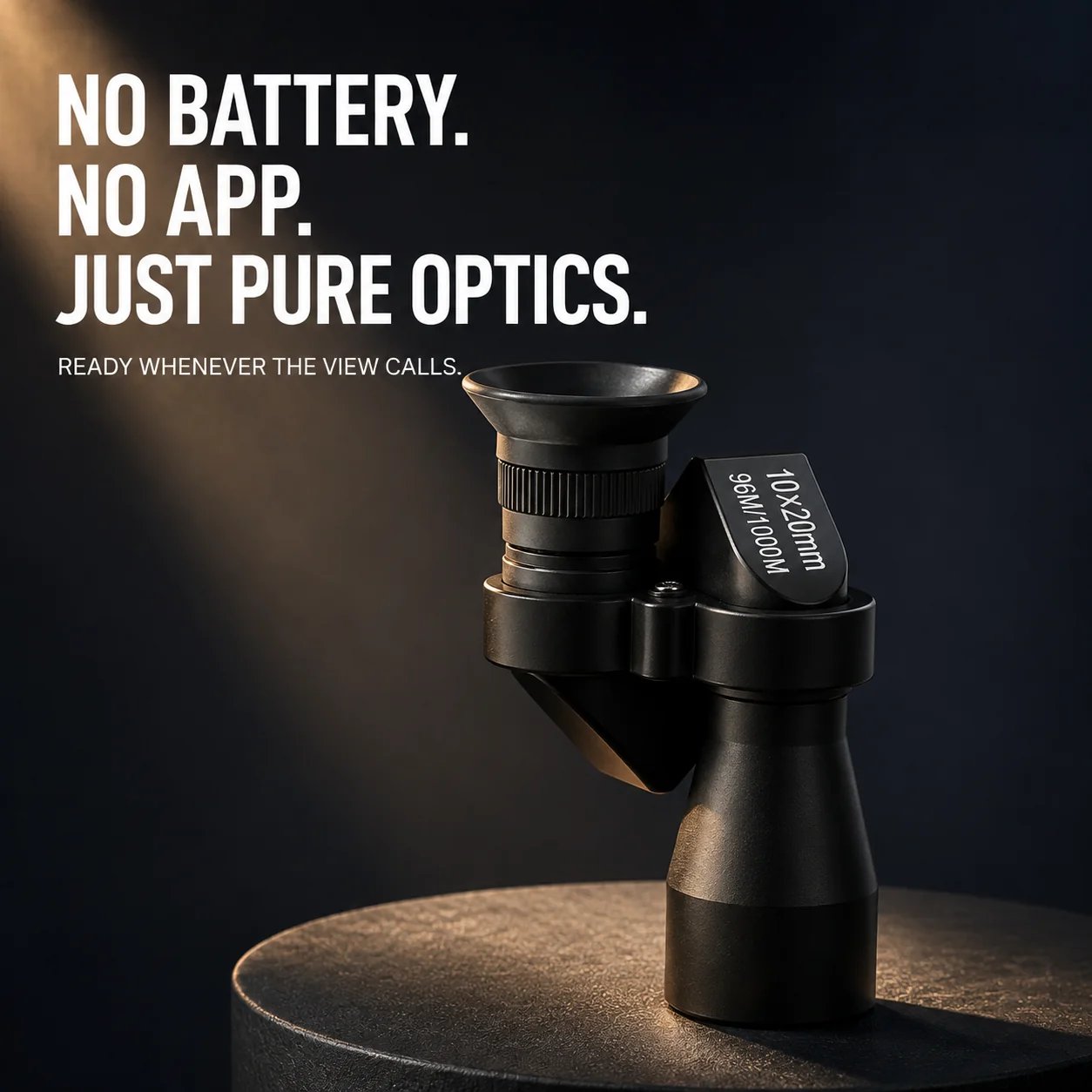
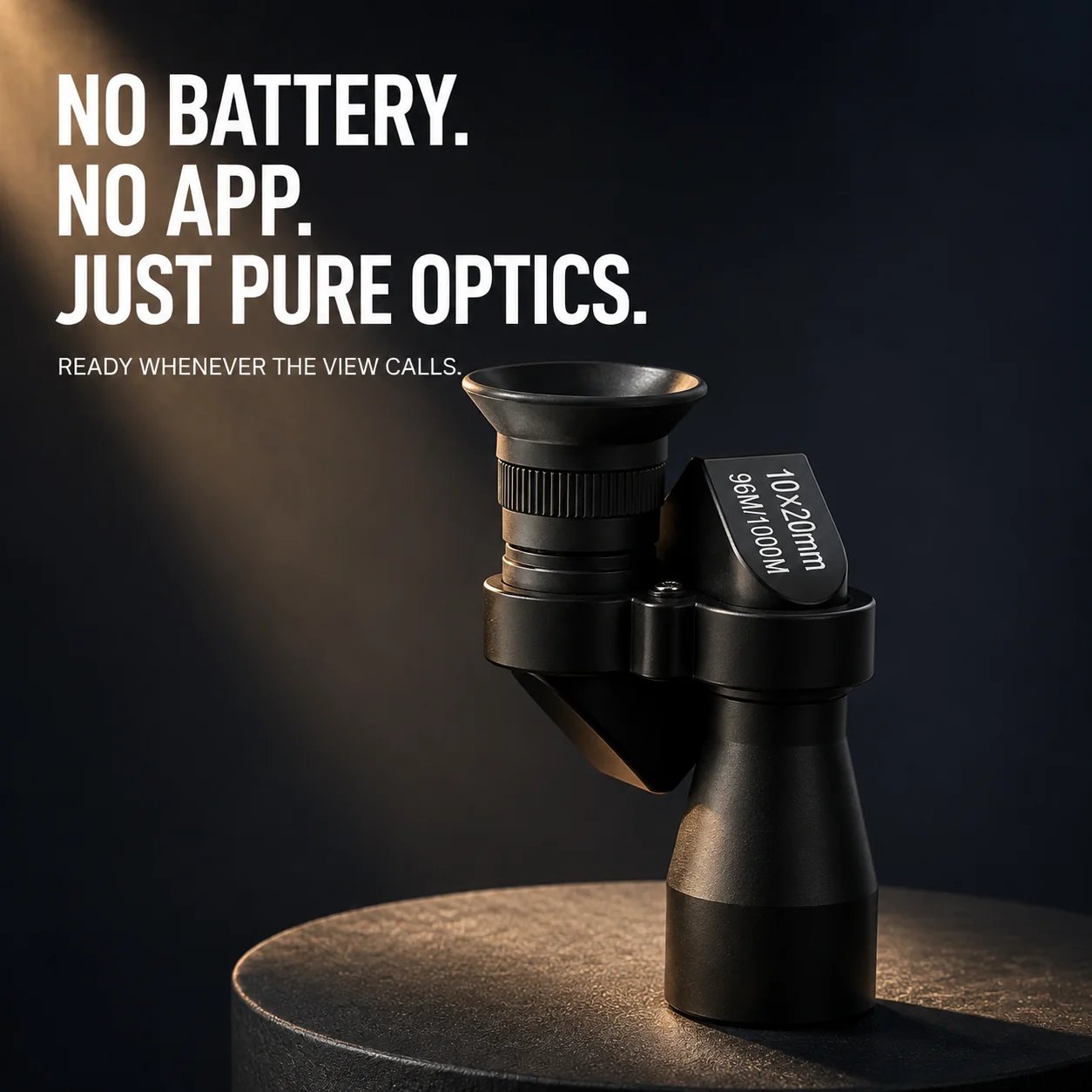
- No battery, charging or app required
- Manual focus for different viewing distances
- Compact folded optical design for travel
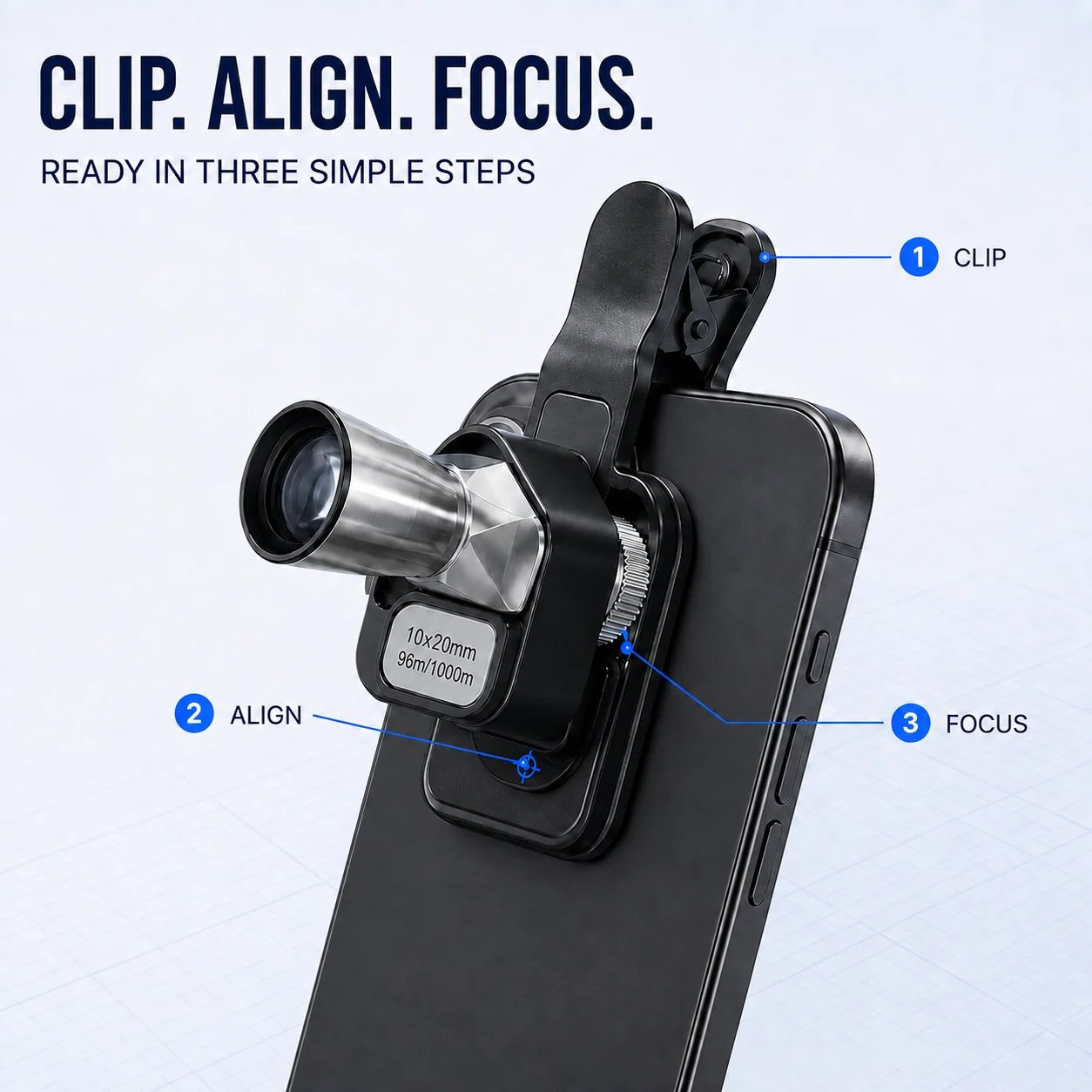
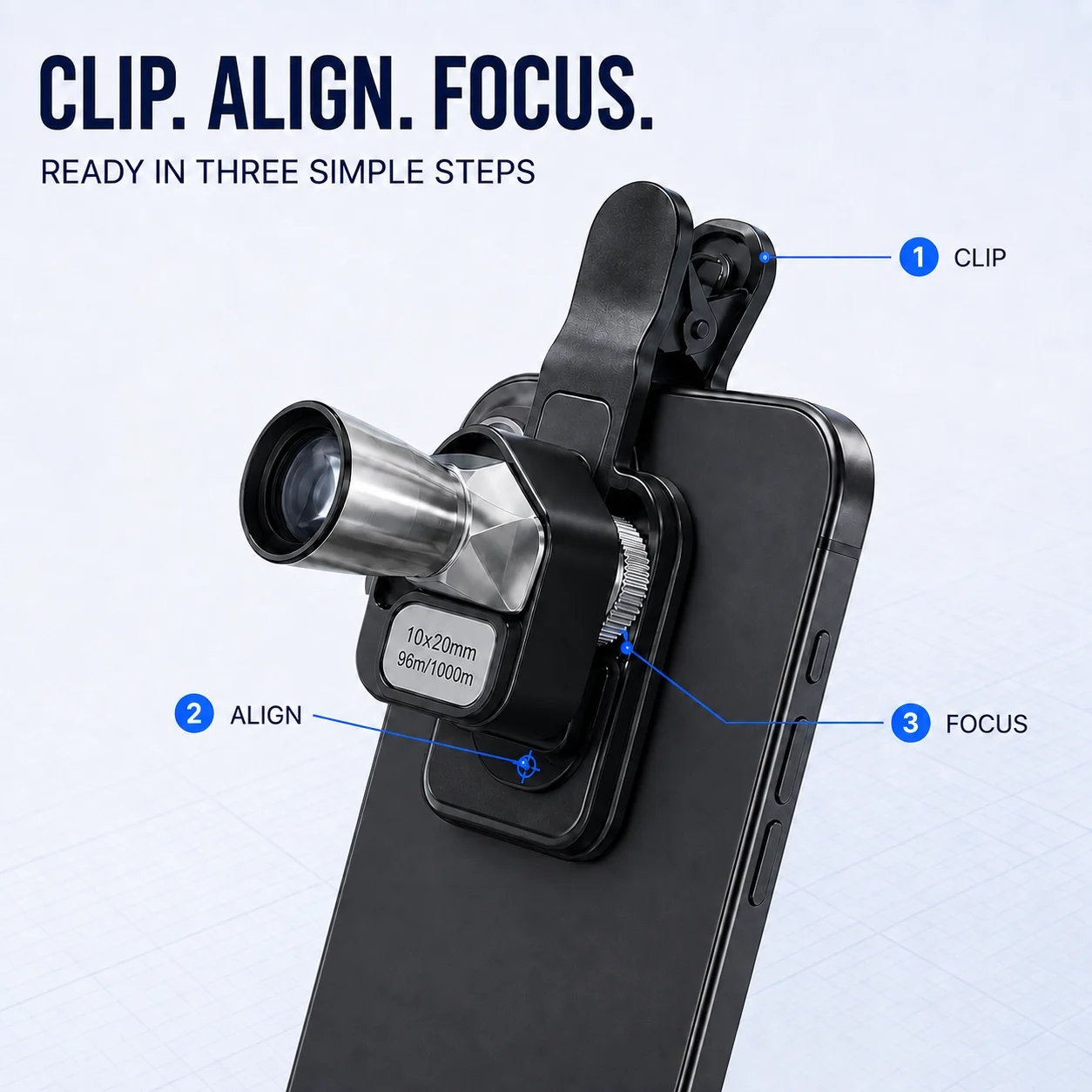
Set Up in Three Simple Steps
Correct camera alignment matters. Take a moment to center the eyepiece before focusing.
1
Attach the Clip
Secure the adjustable phone holder without covering buttons or controls.
2
Align the Camera
Center the monocular eyepiece over the phone's active main camera.
3
Turn to Focus
Aim at the distant subject and rotate the focus ring until details sharpen.
KNOW WHAT YOU ARE SEEING
10× Optical View, With Optional Phone Cropping
The monocular provides fixed optical magnification. You can then use your phone's digital zoom to crop closer or reduce the circular edge visible around the image.
Important: Additional phone zoom is digital—not extra optical magnification. Final image quality depends on alignment, focus, lighting, hand stability and your phone camera.
Made for the Moments Beyond Normal Phone Reach
Travel & Landmarks
Explore distant architectural details.
Sports & Events
Bring the action closer from your seat.
Hiking & Camping
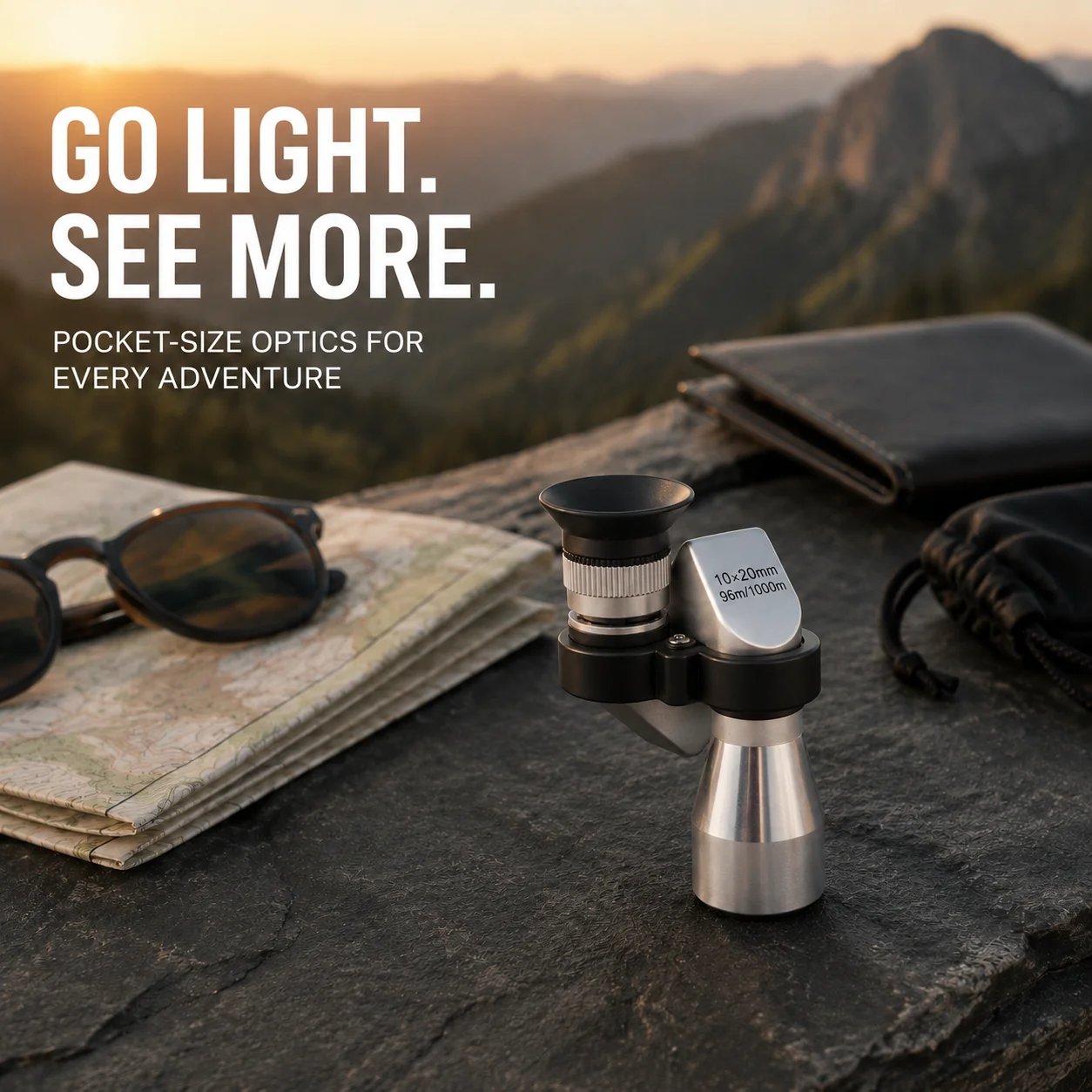
Scan scenery without bulky binoculars.
Casual Nature Viewing
Observe wildlife from a respectful distance.
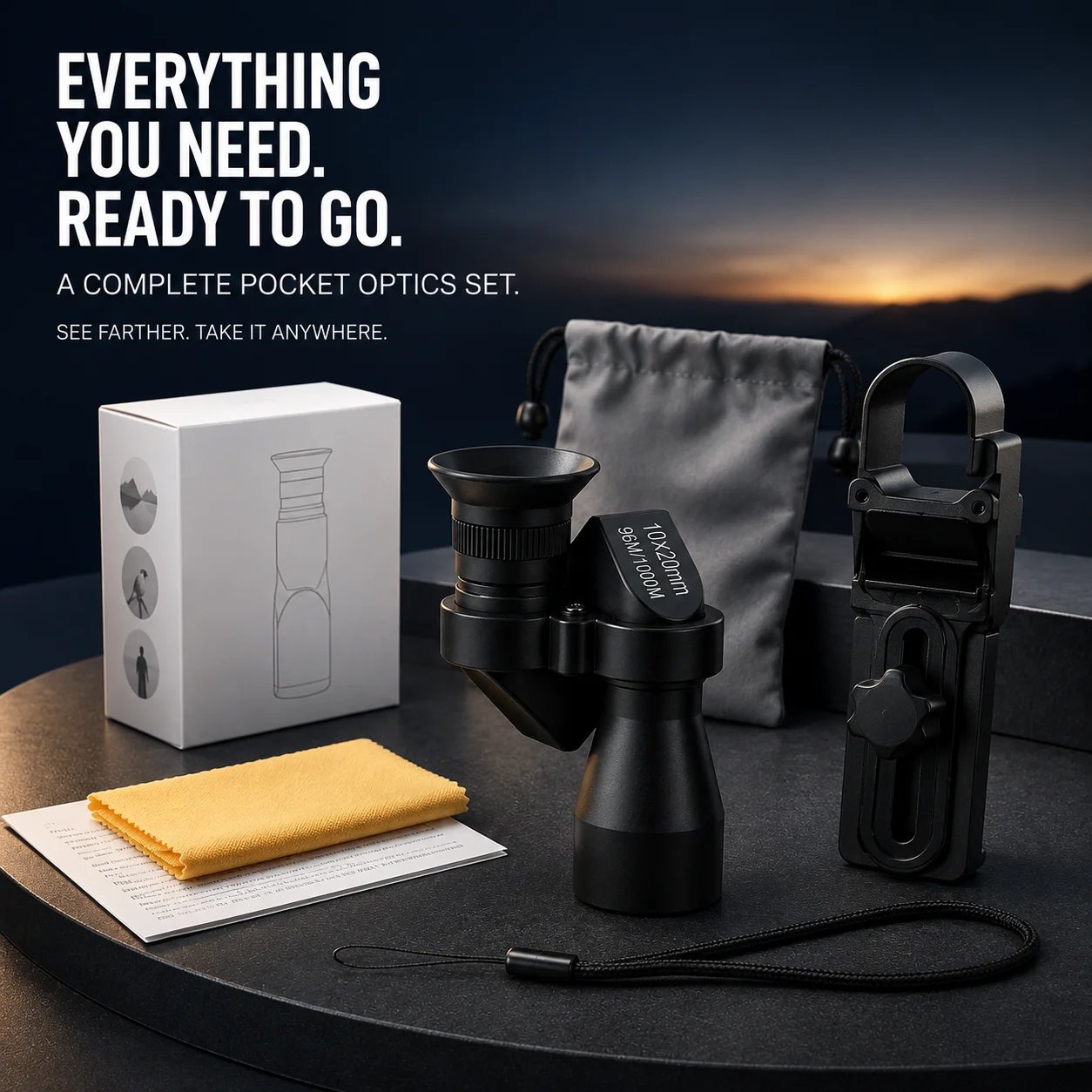
Compact Optics Without Extra Electronics
Marked Magnification10× Fixed
Objective Diameter20mm
Marked Field of View96m / 1000m
FocusManual Ring
Viewing ModesDirect + Smartphone
Power RequiredNone
Compatibility note: Camera position, phone thickness and protective cases vary. Some phones may require the case to be removed. Multi-camera phones must be aligned with the active main lens.
Frequently Asked Questions
Is the magnification adjustable?
The monocular is marked as a fixed 10× optical model. The ring adjusts focus, not optical magnification. Additional enlargement in the phone app is digital zoom.
Can I use it without a phone?
Yes. It can be used directly as a compact monocular by looking through the eyepiece and adjusting the focus.
Will it fit every smartphone?
Universal compatibility cannot be guaranteed. Camera placement, phone dimensions, lens switching and case thickness differ between models.
Why can I see a circular black edge?
This usually means the phone camera and eyepiece need finer alignment. A small amount of phone digital zoom may crop the circular edge, but it can also reduce image quality.
Does it provide night vision?
No night-vision function is shown. Best results should be expected in bright daytime or well-lit conditions.
How can I get a steadier image?
Use both hands, brace your arms against a stable surface and avoid excessive digital zoom. Ten-times magnification also makes normal hand movement more visible.
Safety: Never look at the sun through any telescope or optical lens. Use responsibly and respect other people's privacy.
-
Enjoy free shipping on orders over $50. Orders are processed within 1–3 business days and typically arrive within 7–15 business days.
-
We work with trusted international shipping partners to deliver orders worldwide.
-
Tracking information will be sent by email once your order ships, and you'll receive updates at key stages of transit until your package arrives.
Shop with confidence! We offer a 30-day return and exchange policy from the date you receive your order.
If you're not completely satisfied with your purchase, please contact our customer support team for assistance.
For return or exchange requests, please email us at support@householdchoose.com.
POCKET-SIZE OPTICAL VIEW
See It Closer. Capture It With Your Phone.
Bring distant landmarks, events and outdoor details into view with a compact 10×20 monocular that also connects to your smartphone camera.
10×Fixed optical magnification
20mmCompact objective lens
2 Ways to UseObserve directly or record by phone
WHEN YOUR PHONE CANNOT REACH
Far-Away Moments Become Tiny, Soft and Easy to Miss
Standard phone cameras are convenient, but distant stages, buildings and natural details can still look small in the frame.
- Bring distant subjects visibly closer
- Observe before deciding what to photograph
- Carry less than a full-size pair of binoculars
ONE SMALL TOOL. TWO MODES.
Look Through It—or Let Your Phone See Through It
Use the eyepiece for direct monocular viewing, or align it with your phone's main camera to capture photos and videos of the magnified view.
- No battery, charging or app required
- Manual focus for different viewing distances
- Compact folded optical design for travel
Set Up in Three Simple Steps
Correct camera alignment matters. Take a moment to center the eyepiece before focusing.
1
Attach the Clip
Secure the adjustable phone holder without covering buttons or controls.
2
Align the Camera
Center the monocular eyepiece over the phone's active main camera.
3
Turn to Focus
Aim at the distant subject and rotate the focus ring until details sharpen.
KNOW WHAT YOU ARE SEEING
10× Optical View, With Optional Phone Cropping
The monocular provides fixed optical magnification. You can then use your phone's digital zoom to crop closer or reduce the circular edge visible around the image.
Important: Additional phone zoom is digital—not extra optical magnification. Final image quality depends on alignment, focus, lighting, hand stability and your phone camera.
Made for the Moments Beyond Normal Phone Reach
Travel & Landmarks
Explore distant architectural details.
Sports & Events
Bring the action closer from your seat.
Hiking & Camping
Scan scenery without bulky binoculars.
Casual Nature Viewing
Observe wildlife from a respectful distance.
Compact Optics Without Extra Electronics
Marked Magnification10× Fixed
Objective Diameter20mm
Marked Field of View96m / 1000m
FocusManual Ring
Viewing ModesDirect + Smartphone
Power RequiredNone
Compatibility note: Camera position, phone thickness and protective cases vary. Some phones may require the case to be removed. Multi-camera phones must be aligned with the active main lens.
Frequently Asked Questions
Is the magnification adjustable?
The monocular is marked as a fixed 10× optical model. The ring adjusts focus, not optical magnification. Additional enlargement in the phone app is digital zoom.
Can I use it without a phone?
Yes. It can be used directly as a compact monocular by looking through the eyepiece and adjusting the focus.
Will it fit every smartphone?
Universal compatibility cannot be guaranteed. Camera placement, phone dimensions, lens switching and case thickness differ between models.
Why can I see a circular black edge?
This usually means the phone camera and eyepiece need finer alignment. A small amount of phone digital zoom may crop the circular edge, but it can also reduce image quality.
Does it provide night vision?
No night-vision function is shown. Best results should be expected in bright daytime or well-lit conditions.
How can I get a steadier image?
Use both hands, brace your arms against a stable surface and avoid excessive digital zoom. Ten-times magnification also makes normal hand movement more visible.
Safety: Never look at the sun through any telescope or optical lens. Use responsibly and respect other people's privacy.
Why We're The Best...

Free Shipping Over $50

Safe & Secure Checkout

Hassle-Free Returns

100% Money-Back
There's More To See
Example product title
- $24.99 USD
$39.99 USD- $24.99 USD
- Unit price
- per
Example product title
- $24.99 USD
$39.99 USD- $24.99 USD
- Unit price
- per
Example product title
- $24.99 USD
$39.99 USD- $24.99 USD
- Unit price
- per
Example product title
- $24.99 USD
$39.99 USD- $24.99 USD
- Unit price
- per
Example product title
- $24.99 USD
$39.99 USD- $24.99 USD
- Unit price
- per
Example product title
- $24.99 USD
$39.99 USD- $24.99 USD
- Unit price
- per
Example product title
- $24.99 USD
$39.99 USD- $24.99 USD
- Unit price
- per
Example product title
- $24.99 USD
$39.99 USD- $24.99 USD
- Unit price
- per
Example product title
- $24.99 USD
$39.99 USD- $24.99 USD
- Unit price
- per
Example product title
- $24.99 USD
$39.99 USD- $24.99 USD
- Unit price
- per
Recently Viewed Products
Example product title
- $24.99 USD
$39.99 USD- $24.99 USD
- Unit price
- per
Example product title
- $24.99 USD
$39.99 USD- $24.99 USD
- Unit price
- per
Example product title
- $24.99 USD
$39.99 USD- $24.99 USD
- Unit price
- per
Example product title
- $24.99 USD
$39.99 USD- $24.99 USD
- Unit price
- per
Example product title
- $24.99 USD
$39.99 USD- $24.99 USD
- Unit price
- per
Example product title
- $24.99 USD
$39.99 USD- $24.99 USD
- Unit price
- per
Example product title
- $24.99 USD
$39.99 USD- $24.99 USD
- Unit price
- per
Example product title
- $24.99 USD
$39.99 USD- $24.99 USD
- Unit price
- per
Example product title
- $24.99 USD
$39.99 USD- $24.99 USD
- Unit price
- per
Example product title
- $24.99 USD
$39.99 USD- $24.99 USD
- Unit price
- per

- Choosing a selection results in a full page refresh.


